

一部永不言败的人生诗篇
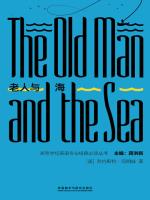
The Old Man and the Sea is a middle-grade novel written by the American author Ernest Hemingway in Cuba in 1951 and published in 1952. Based on a true story, the book was a hit with critics and readers alike upon publication. Hemingway also won the Pulitzer Prize in 1953 and the Nobel Prize for Literature in 1954 for this excellent work.
The Old Man and the Sea revolves around the story of Santiago, an old Cuban fisherman who fishes for fish. After 84 consecutive days without a fish, he does not give up hope and on the 85th day he finally catches a rare large marlin, starting an indomitable struggle between man and fish. The exhausted marlin was killed by the old fisherman and tied to the bow of the boat. On his way home, however, the old fisherman is attacked by a shark and it's a fight to the death before the old fisherman returns with the remains of the fish.
The writing style of this work is very distinctive. It combines the iceberg theory and symbolism in a writing style that is cohesive in language, respectful of the facts and compact in its depiction of the old man's fishing, but also retains great scope for imagination. Take this passage, for example “ When he saw the shark he leaned over the side and punched a t him. He hit only meat and the hide was set hard and he barely got the knife in. The blow hurt not only his hands but his shoulder too. But the shark came up fast with his head out and the old man hit him squarely in the center of his flat-topped head as his nose came out of water and lay against the fish. The old man withdrew the blade and punched the shark exactly in the same spot again. He still hung to the fish with his jaws hooked and the old man stabbed him in his left eye. The shark still hung the re. ”。 The passage is described without too many modifiers or long, complex sentence structures, but in a combination of long and short sentences and simple sentences, with a tight arrangement of words to create a tense atmosphere as the old man fights the shark. This straightforward description gives the reader a real sense of being there, as if they were witnessing it and really hearing the old man's voice, which is evocative.
The book is of great aesthetic and artistic value. The young boy Manolin who accompanies the old man, the big marlin, the shark, the lion, the various numerical and behavioural symbols of events and even the old man himself are all mentioned in the book and have special meanings. The diversity of these symbols also reflects the iceberg theory of Hemingway's writing. Some of these special meanings are given by Hemingway, perhaps by critics, or by the reader's own particular perceptions. Hemingway's practice of omitting the reader's experience from his writing also enriches the readability, the explorability, of the story itself.
In reading The Old Man and the Sea in detail, what struck me most was the old man's spirit of never saying die. I call The Old Man and the Sea "a poem that never fails" because, in real life, few people are able to possess this spirit of breaking through and fighting to the end, and many choose to stop when faced with the mountain of difficulties. But the old man in the book overcame the sea with a very human spirit. He endured great pain, his hands were cramped and his weapons were destroyed, but he kept on fighting against the sea. Although he did not keep the fish, his every move was tinged with tragedy and a strong and resilient spirit. The Old Man and the Sea gives us a lesson that, despite the odds, one can always fight through them with gritted teeth. Although the fruits of victory may be little or nothing, it is better than starting with nothing at all. The old man's never-say-die spirit and optimistic attitude are important lessons for us to learn in real life.
The Old Man and the Sea is a world-renowned book that still shines through the trials of history.


 京公网安备 11010802032529号