

书评
用户827686
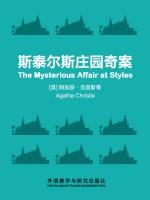
As Agatha Christie’s debut novel, *The Mysterious Affair at Styles* is
far more than a mere "first attempt"—it is the key that
unlocked the Golden Age of detective fiction, introducing the world to a
literary universe built on intricate puzzles and sharp psychological
insight. Published in 1920 but penned during World War I, this work
bears the distinct marks of Christie’s early genius, blending personal
experience with groundbreaking narrative craft. Set in the cloistered
confines of Styles Court, the story unfolds around the brutal poisoning
of Emily Inglethorp, a wealthy widow whose household simmers with hidden
tensions. Her young new husband, discontented step-sons, enigmatic
female companion, and the assorted residents of the estate all emerge as
suspects, each harboring motives as tangled as the English countryside’s
hedgerows. What elevates the mystery beyond a typical whodunit is
Christie’s masterful manipulation of suspicion: just as readers fixate
on the obvious culprit—the seemingly opportunistic husband Alfred—she
shifts the narrative ground, weaving red herrings and false leads that
keep even seasoned mystery fans guessing until the final reveal. The
novel’s greatest legacy, however, is the introduction of Hercule Poirot.
Inspired by Belgian refugees Christie encountered during the war, this
diminutive detective with an iconic mustache and a reverence for his
"little grey cells" arrives fully formed, his blend of
meticulous observation and psychological acuity setting him apart from
the era’s more action-driven sleuths. Paired with Arthur Hastings, his
earnest yet often misguided Watson-like sidekick, Poirot drives the
story with a charm that would define Christie’s work for decades. Their
dynamic—equal parts banter and intellectual contrast—adds warmth to the
taut mystery, balancing the grimness of murder with understated wit.
Christie’s background as a wartime volunteer nurse shines through in the
novel’s centerpiece: the poisoning via strychnine. The scientific
precision of the诡计 (trick)—using bromide to mask the poison’s effects
and delay its onset—lends credibility to the plot, a detail that
reflects her rigorous understanding of pharmacology. This commitment to
factual rigor, paired with her innovative use of the "closed
circle" mystery (confining suspects to the庄园), redefined the rules
of the genre: for the first time, a long-form detective novel focused
solely on the intellectual contest between author and reader, eschewing
unnecessary adventure or melodrama. If the novel has flaws, they are
the endearing ones of a writer finding her stride. The character roster
occasionally feels unwieldy, and some plot explanations lean slightly
too heavily on coincidence. Yet these minor imperfections fade beside
its achievements. Christie’s exploration of human greed and
deception—how even the most polished upper-class facades hide petty
resentments and deadly desires—reveals a maturity beyond her years. As
Poirot notes, the truth lies not in clues alone, but in "the little
inconsistencies" of human behavior, a theme that would become the
backbone of her later classics. Nearly a century later, *The Mysterious
Affair at Styles* remains essential reading. It is not just the origin
story of Hercule Poirot, but a blueprint for every great detective novel
that followed: a closed setting, a cast of morally ambiguous characters,
and a puzzle where all clues are laid bare for the attentive reader. For
those new to Christie, it is the perfect entry point into her work; for
longtime fans, it is a fascinating glimpse of a master honing the skills
that would make her the "Queen of Mystery." In the end, this
debut proves what Christie’s career would confirm: few writers have ever
understood the art of the mystery as deeply, or as delightfully, as she did.

 京公网安备 11010802032529号