

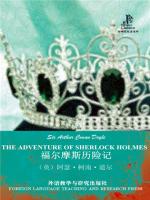
《福尔摩斯历险记》书评
A Timeless Triumph: The Enduring Genius of The Adventures of Sherlock Holmes Sir Arthur Conan Doyle’s The Adventures of Sherlock Holmes, first published in 1892, is far more than a mere collection of twelve detective stories. It is the definitive crystallization of a cultural archetype, the bedrock upon which the entire genre of detective fiction was built. While earlier works introduced the concept of the analytical sleuth, it was in these pages that Sherlock Holmes—and his indispensable chronicler, Dr. John Watson—leapt into vivid, enduring life. Reading this collection today is not an exercise in nostalgia but a revelation of timeless narrative craftsmanship and character brilliance. The genius of the collection lies not in sprawling, complex plots, but in Doyle’s mastery of the short story form. Each tale—from the ominous “Adventure of the Speckled Band” to the politically charged “Scandal in Bohemia”—is a perfectly engineered puzzle box. Doyle understood the fundamental contract with the reader: a seemingly insoluble mystery is presented, clues are fairly planted (though often in plain sight), and the brilliant detective arrives at a startling yet logical conclusion. The stories are economical, suspenseful, and deeply satisfying. They respect the reader’s intellect, inviting us to try and match wits with Holmes, even as we know we are destined to be outshone. Yet, the true, immortal magic of The Adventures resides in its characters. Sherlock Holmes is a revolutionary figure: a brain in a deerstalker, a man who treats crime as a science and emotion as a distracting foreign substance. His methods of deduction, his violin playing, his bouts of ennui, and his cocaine use create a portrait of a fascinating, flawed, and utterly compelling genius. He is not a machine, however. His dry wit, his theatrical flair in revealing solutions, and his underlying sense of justice reveal a complex humanity beneath the calculating exterior. He is made profoundly accessible through the lens of Dr. Watson. Watson is the perfect narrator—intelligent enough to appreciate Holmes’s methods, but ordinary enough to represent the awestruck reader. His loyalty, courage, and warm humanity provide the essential counterbalance to Holmes’s icy intellect. He is not a bumbling sidekick, but a steadfast friend and a competent medical man whose emotional responses ground the stories in a recognizable world. Their dynamic, a platonic marriage of opposites at 221B Baker Street, is the beating heart of the entire canon. It is a relationship built on mutual respect and unspoken affection, making the mysteries not just intellectual exercises, but human dramas. Furthermore, the collection masterfully evokes a tangible sense of place and period. Victorian London is a character in itself—a city of swirling fog, gas-lit streets, hansom cabs, and a stark social divide. Holmes navigates this world from his cluttered apartment to the country manors of the distressed aristocracy, reflecting the anxieties and intricacies of its age. The stories capture a world on the cusp of modernity, where science and reason promise to dispel the shadows of superstition, yet mystery and malevolence persist in the human heart. In conclusion, The Adventures of Sherlock Holmes remains a masterpiece not because it is old, but because it is perennially fresh. Its prose is clear and engaging, its plots are ingenious, and its central duo is one of literature’s most beloved partnerships. It established the rules of the detective game that countless authors have since followed, adapted, and subverted. More than a century later, Holmes’s command to Watson—“The game is afoot!”—still thrills with undiminished power. This collection is the essential starting point, a gateway into a world where logic reigns supreme, evil is always outwitted, and friendship provides the warm fire around which all great adventures are told. It is, quite simply, indispensable.

 京公网安备 11010802032529号