


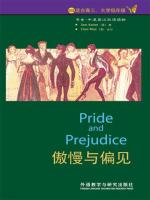
傲慢与偏见
啊??
A Timeless Ode to Growth and Authenticity: A Review of Pride and
Prejudice Jane Austen’s Pride and Prejudice, first published in 1813,
is far more than a classic romance novel—it is a sharp, witty dissection
of social class, gender roles, and the true meaning of love in
Regency-era England. Through the intertwined lives of the Bennet family,
especially the quick-witted Elizabeth Bennet and the brooding Mr. Darcy,
Austen crafts a story that continues to resonate with readers across
centuries. At the heart of the novel lies the eponymous flaws that
drive its central conflict: Darcy’s initial pride, rooted in his
aristocratic status and disdain for the impropriety of the Bennet
family, and Elizabeth’s prejudice, sparked by Darcy’s arrogant snub at
the Meryton ball and amplified by the cunning lies of Mr. Wickham. What
makes their relationship so compelling is not a sudden, passionate
romance, but a slow, deliberate journey of self-reflection and growth.
Darcy learns to set aside his class-based arrogance, humbling himself to
apologize and act with kindness toward Elizabeth’s family despite their
shortcomings. Elizabeth, in turn, confronts her own bias, realizing that
her quick judgment blinded her to Darcy’s genuine goodness and led her
to misjudge the true character of those around her. Austen’s writing
is a masterclass in irony and social satire. She pokes gentle yet
incisive fun at the absurdities of the marriage market of her time,
where women’s worth was often reduced to their ability to secure a
wealthy husband. The overbearing Mrs. Bennet, whose sole mission is to
marry off her five daughters, and the obsequious Mr. Collins, whose
proposal to Elizabeth is a comical display of self-importance, serve as
vivid caricatures of the societal pressures that shaped women’s lives.
Yet Austen never mocks her characters outright; instead, she infuses
them with humanity, allowing readers to recognize the constraints that
limit even the most spirited individuals—including Elizabeth, who, for
all her independence, still faces the reality that financial security
and social acceptance are tied to marriage. What elevates Pride and
Prejudice beyond a typical love story is its celebration of intellectual
and emotional equality. Elizabeth rejects Mr. Collins’s proposal with
unapologetic clarity, refusing to marry without respect and affection,
and later turns down Darcy’s first proposal, outraged by his
condescension toward her family. Her insistence on marrying for love,
not for status or wealth, was radical for her time, and it remains a
powerful message today. Darcy, too, comes to understand that love cannot
thrive on inequality; his transformation from a proud, aloof nobleman to
a man willing to put Elizabeth’s happiness above his own is a testament
to the redemptive power of genuine affection. In the end, Pride and
Prejudice is a story about seeing beyond first impressions—about
recognizing that true character lies beneath the surface of social masks
and class distinctions. Austen’s prose is elegant, her dialogue
sparkling with wit, and her characters so vivid that they feel like old
friends. For over two hundred years, this novel has captivated readers
not just because of its timeless romance, but because it reminds us that
pride and prejudice are universal flaws, and that growth, humility, and
love are the only antidotes. It is not just a classic of English
literature; it is a mirror held up to the human heart.

 京公网安备 11010802032529号