

Preserving
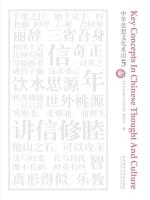
The fifth installment of the Terminologies of Chinese Thought and Culture series upholds the exceptional standard of its predecessors, solidifying its status as an indispensable reference for anyone seeking a deep, nuanced understanding of the Chinese intellectual tradition. In a world where superficial or decontextualized translations of key Chinese concepts abound, this volume serves as a scholarly lighthouse, guiding readers through the complex and profound depths of Chinese philosophy, history, and aesthetics with remarkable clarity and precision.
The book's greatest strength lies in its meticulous approach to translation and explanation. Each entry is structured as a concise yet comprehensive mini-essay. It typically begins with the most accurate and context-sensitive English equivalent (e.g., "The Unity of Heaven and Humanity" for "天人合一"), followed by a lucid explanation of the term's historical evolution, core philosophical or cultural connotations, and its significance within different schools of thought. Crucially, the original Chinese term, its pinyin transliteration, and often its classical textual sources are provided, creating a transparent and academically rigorous framework. This methodology successfully navigates the treacherous waters of cross-cultural translation, avoiding the pitfalls of over-simplification and exoticism. It respects the terms' inherent complexity, acknowledging that concepts like 仁 (ren, humaneness) or 道 (dao, the Way) are not mere vocabulary items but entire universes of meaning shaped by millennia of discourse.
Furthermore, this volume demonstrates a keen awareness of contemporary relevance. While firmly grounded in classical texts, the explanations frequently draw connections to modern contexts, suggesting how these ancient ideas continue to inform Chinese perspectives on governance, ethics, art, and interpersonal relations. This bridge between the ancient and the modern makes the content not just an academic exercise but a vital tool for understanding the underlying logic of contemporary Chinese society and its approach to global issues.
The selection of terms appears both thoughtful and expansive. It moves beyond the most commonly cited philosophical pillars to include concepts from classical aesthetics, literary criticism, historical theory, and social organization. This broader scope paints a richer, more complete picture of the Chinese mind, revealing how foundational principles permeated all aspects of cultural and intellectual life. The organization is logical, and the cross-referencing between related terms is helpful for readers to build a connective web of understanding.
In terms of presentation, the book maintains a clean, accessible format suitable for scholars, students, translators, and engaged general readers alike. The prose is authoritative yet free of unnecessary jargon, making profound ideas approachable.
If one were to offer a minor suggestion for future editions, it would be to consider including slightly more comparative cultural notes—briefly juxtaposing a concept with a roughly analogous (or fundamentally contrasting) Western idea could further illuminate its uniqueness for readers from different backgrounds. However, this is a mere enhancement to an already outstanding framework.
In conclusion, Terminologies of Chinese Thought and Culture 5 is an exemplary work of cultural translation and intellectual curation. It functions not as a simplified dictionary but as a series of masterfully crafted portals into the heart of Chinese civilization. By providing faithful, contextualized, and profound explanations of its core conceptual vocabulary, this series performs an invaluable service. It is an essential resource for sinologists, a reliable guide for students of translation and international relations, and a fascinating read for any global citizen committed to moving beyond stereotypes and engaging with one of the world's most enduring and influential intellectual traditions. This volume, and the series as a whole, deserves a place on the shelf of anyone serious about understanding China

 京公网安备 11010802032529号