

读后感
kethrine
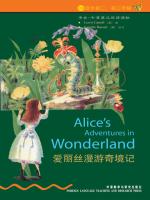
Reading Alice's Adventures in Wonderland by Lewis Carroll is like
stepping through a rabbit hole into a world where logic bends, nonsense
reigns, and the ordinary transforms into the extraordinary. What begins
as a simple act of curiosity—Alice chasing a waistcoat-clad
rabbit—unfolds into a series of absurd, delightful, and surprisingly
profound encounters that linger in the mind long after the final page.
Carroll’s greatest genius lies in his ability to weave a story that
appeals to both children and adults, albeit in vastly different ways.
For children, the novel is a riot of whimsy: a grinning Cheshire Cat
that fades into thin air, a Mad Hatter’s tea party that never ends, and
a Queen of Hearts whose favorite phrase is “Off with their heads!” These
characters are larger than life, their antics a source of endless
amusement. Yet for adult readers, the story is a clever satire of
Victorian society, a playful critique of rigid logic, and a meditation
on the confusion of growing up. Alice’s constant struggle to fit into a
world that changes its rules at a moment’s notice mirrors the
disorientation of childhood, when one is neither a child nor an adult,
and every new experience feels like a puzzle without a solution. What
strikes me most about Alice is her resilience. Despite being lost,
confused, and often dismissed by the inhabitants of Wonderland, she
never loses her sense of wonder or her determination to find her way
home. She questions the absurdity around her, refuses to be cowed by the
Queen’s tyranny, and remains true to herself even when the world tells
her she is too big or too small. In a way, Alice is a symbol of the
human spirit—curious, adaptable, and unyielding in the face of chaos.
The novel’s enduring appeal also stems from its celebration of
imagination. In a world that often values reason over creativity,
Alice's Adventures in Wonderland reminds us that nonsense can be
meaningful, that curiosity is a virtue, and that the most extraordinary
journeys often begin with a single, curious step. Carroll does not seek
to explain Wonderland; he invites us to embrace it, to let go of our
need for logic, and to revel in the magic of a world where anything is
possible. In the end, Alice's Adventures in Wonderland is more than
just a children’s story. It is a timeless tale about the journey of
self-discovery, the power of imagination, and the courage to navigate a
world that often makes no sense. As Alice herself says, “Imagination is
the only weapon in the war against reality.” This novel is a testament
to that truth, a reminder that even in the most chaotic of times, we can
find solace, joy, and wisdom in the realm of the imagination.

 京公网安备 11010802032529号