

The Timeless Resilie
用户848411
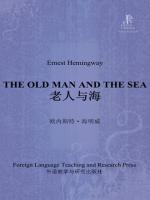
Ernest Hemingway’s The Old Man and the Sea stands as an indomitable
masterpiece of modern literature, a magnum opus that transcends the
confines of a simple fishing tale to encapsulate the quintessence of
human fortitude, existential struggle, and the profound bond between man
and nature. Penned with Hemingway’s signature iceberg theory—wherein the
submerged bulk of meaning lies beneath a sparse, laconic surface—the
novella unfolds as a poignant odyssey of an aging Cuban fisherman,
Santiago, whose 84-day streak of ill fortune culminates in a relentless,
epochal battle against a colossal marlin in the vast, unforgiving
expanse of the Gulf Stream. What renders this novella a paragon of
literary excellence is its masterful juxtaposition of visceral, tactile
imagery and abstruse philosophical profundity. Hemingway’s prose, though
ostensibly succinct, is replete with erudite lexicon and syntactical
intricacies that elevate the narrative to a realm of sublime artistry.
When Santiago first espies the marlin’s dorsal fin cutting through the
cerulean waters, Hemingway describes it as “a great blade of blue steel,
flickering in the sunlight”—a metaphor that not only evokes the fish’s
formidable grandeur but also foreshadows the arduous, gladiatorial
contest that ensues. The protracted struggle between Santiago and the
marlin is not merely a physical duel; it is a symphony of tenacity, a
testament to the indomitable spirit that refuses to succumb to the
vicissitudes of fate. Santiago’s mantra, “A man can be destroyed but not
defeated,” reverberates throughout the novella as a clarion call of
existential defiance, a maxim that resonates with the most profound
depths of the human condition. Moreover, Hemingway’s delineation of
the relationship between Santiago and the marlin is a tour de force of
literary craftsmanship, imbued with a sense of reverence and mutual
respect that transcends the dichotomy of predator and prey. Santiago
regards the marlin not as a mere quarry but as a worthy adversary, a
fellow denizen of the sea endowed with grace, power, and nobility. As he
grapples with the fish for days on end, his hands lacerated by the
unforgiving line, his body wracked by exhaustion, Santiago’s reverence
for his foe deepens, transforming the pursuit into a sacred rite of
passage. This nuanced portrayal of empathy amid conflict is a hallmark
of Hemingway’s narrative genius, a subtle yet potent commentary on the
interconnectedness of all living beings. The novella’s denouement,
wherein Santiago returns to shore with nothing but the marlin’s skeletal
remains, is a stroke of narrative brilliance that defies conventional
expectations of triumph and defeat. While the townsfolk may perceive his
endeavor as a failure, Santiago’s inner resolve remains unshaken; he has
proven to himself, and to the boy Manolin who idolizes him, that true
victory lies not in the acquisition of material spoils but in the
unwavering perseverance of the human spirit. Hemingway’s use of symbolic
imagery—the marlin as a metaphor for life’s most formidable challenges,
the sharks as the inexorable forces of decay and adversity—lends the
novella a timeless, allegorical quality that transcends the boundaries
of time and culture. In essence, The Old Man and the Sea is more than
a literary work; it is a profound meditation on the human experience, a
testament to the resilience that lies at the core of our being.
Hemingway’s masterful use of advanced vocabulary, intricate sentence
structures, and symbolic depth renders the novella a veritable treasure
trove of literary merit, a work that continues to captivate and inspire
readers across generations. It is a masterpiece that reminds us that
even in the face of insurmountable odds, the human spirit remains
unvanquishable, a beacon of hope that illuminates the darkest corners of
our existence.

 京公网安备 11010802032529号