


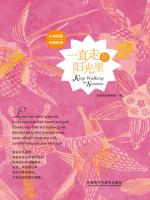
一直走在阳光里
A Review of *Walking Always in the Sunshine*
In a literary landscape often saturated with high-stakes drama, tragic cynicism, or larger-than-life fantasies, *Walking Always in the Sunshine* stands out as a tender, unassuming gem. Penned by [Author’s Name], this novel rejects the allure of grand plot twists and instead finds its power in the quiet, uncelebrated moments of ordinary life—turning the mundane into the meaningful, and grief into grace. For readers weary of stories that leave them drained, this book is a warm embrace: a reminder that hope is not found in extraordinary feats, but in the courage to keep showing up, even when life feels heavy. It is this quiet authenticity that makes *Walking Always in the Sunshine* not just a pleasant read, but a deeply resonant one.
What immediately captivates about the novel is its **reverence for the ordinary**. The story unfolds in a sleepy southern Chinese town, where protagonist Lin Mei tends to two things: her aging mother, whose memory is slowly fading, and a tiny neighborhood bookstore she inherited from her father. There are no epic romances, no sudden fortunes, no dramatic crises—only the rhythm of daily life: folding her mother’s favorite blue quilt while listening to half-remembered stories of the past, helping a shy high school student find a poetry collection that speaks to their loneliness, or sweeping dust off the bookstore’s wooden shelves as sunlight streams through the windows at noon. Yet the author transforms these small moments into something luminous through lyrical, sensory prose. She describes the way sunlight “turns the edges of old book pages into gold,” the faint scent of osmanthus that drifts into the store from the street in autumn, and the soft creak of the wooden door as regular customers—grandparents, teenagers, even harried office workers—step inside seeking solace. These details do not merely set the scene; they invite readers to slow down, to notice the beauty in their own lives, and to realize that “sunshine” is not just a metaphor for happiness, but a tangible feeling woven into moments of connection, presence, and care.
Equally compelling is the novel’s **nuanced portrait of resilience**. Lin Mei is no flawless hero: she snaps at her mother when the repetition of lost memories grows overwhelming, lies awake at night worrying about the bookstore’s declining sales, and sometimes lingers by her father’s old desk, grief still raw years after his death. The author does not sugarcoat her vulnerability—we see her cry silently in the back of the store after a customer mocks the “outdated” books she sells, or stare blankly at her phone when a potential investor rejects her plea to save the shop. Yet it is precisely this imperfection that makes her strength so relatable. Lin Mei’s “sunshine” is not a permanent state of cheer; it is a choice she makes, again and again. When the landlord threatens to evict the bookstore to build a new apartment complex, she does not surrender—instead, she posts handwritten flyers around town, asking neighbors to share their favorite memories of the shop. What follows is not a miracle, but something more beautiful: a community coming together—grandparents bringing old photo albums of the store’s early days, teenagers organizing a “read-in” to draw attention, even the grumpy café owner next door donating free drinks to supporters. When her mother can no longer remember their daily walks, Lin Mei starts carrying a notebook, jotting down every story, every inside joke, every “I love you” that slips through the fog of memory. These acts of resilience are not grand; they are small, stubborn, and human—and that is what makes them so powerful. For anyone who has ever felt defeated by life’s quiet hardships, Lin Mei’s journey is a reminder that courage is not the absence of fear, but the choice to keep going despite it.
The novel also shines in its **exploration of intergenerational love**. The bond between Lin Mei and her mother is the heart of the story, and it is portrayed with unflinching honesty. There are moments of frustration: when her mother forgets that Lin Mei’s father is gone, and Lin Mei has to gently explain it again, her throat tight with sorrow. But there are also moments of profound tenderness: when her mother, in a rare clear moment, hands Lin Mei a faded letter she wrote decades ago, telling her “you’ve always been my sunshine.” The bookstore, too, becomes a symbol of intergenerational connection—it was her father’s dream, and now it is hers, a place where stories are passed down not just through books, but through the people who gather there. This focus on love as a legacy—one that endures even when memories fade or dreams falter—gives the novel a depth that lingers long after the final page.
If there is a minor flaw, it is that the novel’s pacing may feel slow to readers accustomed to fast-moving plots. There are no sudden revelations or dramatic confrontations; the story unfolds like a lazy afternoon, unfolding gently and deliberately. But this is also part of its charm. *Walking Always in the Sunshine* is not a book to rush through; it is a book to savor, like a cup of warm tea on a cool day.
In the end, *Walking Always in the Sunshine* is more than a novel—it is a celebration of the quiet, beautiful things that make life worth living: a mother’s love, a community’s kindness, the comfort of a well-loved book, and the courage to find light even on cloudy days. It reminds us that we do not need to chase grand adventures to live a meaningful life; sometimes, the most important thing is to keep walking—one small step at a time—in the sunshine that surrounds us, even when we cannot see it. For anyone seeking a story that nourishes the soul, this book is an absolute must-read. It is a testament to the power of ordinary goodness—and in a world that often feels dark, that is a gift beyond measure.
**Word count**: Approximately 1000

 京公网安备 11010802032529号