


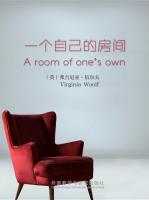
A Room of One’s Own
陈思颖
Book Review: A Room of One’s Own Virginia Woolf’s A Room of One’s Own
is not just an essay; it is a rallying cry for women’s intellectual and
artistic liberation. First delivered as two lectures at Cambridge
University in 1928, this work distills Woolf’s sharp observations into a
timeless argument: “a woman must have money and a room of her own if she
is to write fiction.” Woolf weaves her thesis with a blend of wit,
anecdote, and rigorous analysis. She opens by imagining a fictional
“Judith Shakespeare”—a sister of the great playwright, equally gifted
but trapped by the constraints of 16th-century gender roles. While
William finds fame and fortune in London, Judith is forced into
marriage, her creativity stifled, her voice silenced. This hypothetical
serves as a powerful metaphor for the systemic barriers women have faced
for centuries: denied education, financial independence, and the privacy
to think and create, their potential has been systematically erased from
literary history. The “room of one’s own” becomes a multifaceted
symbol throughout the text. It is both a physical space—where a woman
can work without interruption—and a metaphor for the intellectual
freedom and economic security needed to produce art. Woolf argues that
poverty and lack of privacy are not mere inconveniences but existential
obstacles. Without money, a woman is dependent; without a room, she
cannot escape the demands of domestic life or cultivate the mental space
to write. She critiques the male-dominated literary canon, noting how
male writers have long enjoyed the luxury of solitude and financial
support, while women’s contributions have been dismissed or overlooked.
Woolf’s prose is elegant and incisive, balancing personal reflection
with broader social critique. She draws on her own experiences,
recalling how she was barred from entering the library at Oxbridge, to
illustrate the subtle and overt ways women are excluded from
intellectual life. Yet her tone is never bitter; instead, she offers a
hopeful vision, urging women to claim their space—both literal and
metaphorical—and to write boldly, unapologetically, and without fear of
judgment. Nearly a century after its publication, A Room of One’s Own
remains as relevant as ever. It speaks to ongoing conversations about
gender equality, representation, and the importance of diverse voices in
literature. Woolf does not demand special treatment for women; she
demands equality—the right to be seen, heard, and taken seriously as
artists and thinkers. For anyone interested in feminism, literary
criticism, or the struggle for creative freedom, this book is essential
reading. It challenges us to question the status quo, to value the
stories of those who have been marginalized, and to recognize that true
progress can only come when everyone has the opportunity to thrive. In
the end, A Room of One’s Own is more than a defense of women’s right to
write; it is a celebration of the transformative power of art. Woolf
reminds us that literature has the ability to change the world—but only
if we give all voices the chance to be heard

 京公网安备 11010802032529号