


,
用户870636
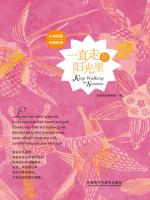
A Luminous Journey Through the Ordinary: A Review of Keep Walking in
Sunshine In an era dominated by sensationalism and high-octane
narratives, Keep Walking in Sunshine emerges as a profoundly refreshing
anthology that celebrates the quiet resilience of the human spirit.
Published as part of the "Heart Like a Garden" bilingual
reading series, this collection of English-Chinese essays offers readers
a sanctuary of warmth, proving that literature need not rely on dramatic
plot twists to touch the deepest corners of our hearts. The book's
greatest strength lies in its unwavering commitment to the ordinary.
Rather than presenting heroic figures or extraordinary circumstances,
the anthology gathers stories of everyday individuals navigating life's
inevitable challenges—financial struggles, health crises, broken
relationships, and the slow erosion of dreams. Yet within these
seemingly mundane narratives, the editors have unearthed remarkable
veins of courage and optimism. One particularly moving piece recounts a
elderly street vendor who, despite losing his savings to fraud,
continues to greet each customer with genuine smiles, believing that
"kindness is the only currency that never devalues." Such
stories remind us that heroism manifests not in grand gestures, but in
the persistent choice to remain kind when bitterness seems justified.
The bilingual format deserves special commendation. As a language
learning tool, the parallel text arrangement serves dual purposes
magnificently. For English learners, the accessible yet elegant prose
provides an ideal bridge between textbook formalism and authentic
literary expression. The translators have demonstrated exceptional
sensitivity, preserving the emotional cadence of the original Chinese
while ensuring natural English flow. Phrases like "turning grief
into grace" and "finding sunshine in the cracks of broken
walls" achieve poetic resonance in both languages, a rare feat that
speaks to the editorial team's expertise, reportedly backed by scholars
from Beijing Foreign Studies University. Thematically, the collection
operates as a gentle manifesto for emotional sustainability. In an age
where "toxic positivity" often masks genuine suffering, these
essays strike a delicate balance—they acknowledge life's hardships
without romanticizing them, while simultaneously refusing to surrender
to despair. The recurring motif of sunlight serves not as naive
escapism, but as a conscious practice of perspective. As one contributor
writes, "Sunshine is not the absence of shadows, but the decision
to stand where light can reach you." This philosophy permeates the
anthology, offering readers practical wisdom rather than empty
platitudes. The structural arrangement enhances the reading experience
considerably. The editors have curated the essays with careful attention
to emotional rhythm, alternating between stories of loss and renewal,
creating a reading experience that mirrors life's own oscillations
between sorrow and joy. This thoughtful sequencing prevents the
collection from becoming either overwhelmingly melancholic or
artificially cheerful. Additionally, the inclusion of reflective prompts
at each section's conclusion transforms passive reading into active
self-examination, making the book particularly valuable for educational
settings or book club discussions. However, the anthology is not without
minor limitations. Some readers might find certain essays overly
sentimental, particularly those employing extended metaphors about
seasonal changes and natural cycles. While these nature motifs
effectively reinforce the book's themes of resilience and renewal,
occasionally they border on predictability. Furthermore, the
collection's focus on individual triumph sometimes neglects broader
systemic issues underlying the characters' struggles—a deliberate choice
perhaps, but one that might leave socially conscious readers wishing for
more contextual depth. Nevertheless, these criticisms hardly diminish
the book's considerable achievements. Keep Walking in Sunshine succeeds
brilliantly in its stated mission: demonstrating that literature can
simultaneously elevate language skills and nourish the soul. For readers
weary of cynicism and despair, it offers a much-needed reminder that
hope remains humanity's most renewable resource. The final essay's
closing lines encapsulate this ethos perfectly: "We do not walk in
sunshine because life is easy; we walk in sunshine because we have
decided that darkness shall not have the final word." In
conclusion, this anthology earns its place as a valuable addition to any
personal library or educational curriculum. It teaches us that the most
profound stories often whisper rather than shout, and that the bravest
act sometimes is simply to continue moving forward with an open heart.
For anyone seeking literature that heals without patronizing, inspires
without lecturing, and illuminates without blinding, Keep Walking in
Sunshine provides a path worth following.

 京公网安备 11010802032529号