

Review of Analysis
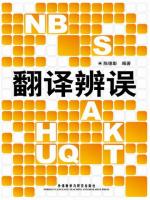
Translation serves as an essential bridge for cross-linguistic and cross-cultural communication. However, mistranslations and improper renderings are everywhere in daily English-Chinese translation practice. Written by Chen Dezhang, Mistranslation Analysis is an extremely practical reference book that directly addresses the most common troubles encountered by translators. This book collects a total of 259 concise commentaries, focusing on typical translation mistakes frequently made by Chinese English learners. It combines theoretical knowledge with hands-on practical skills, making it an outstanding reading material for both English students and entry-level translation practitioners.
Many English learners fall into the rigid trap of literal translation: they simply copy definitions from dictionaries without considering real context, which results in awkward, misleading sentences. Most cases selected in this book originate from this widespread bad habit. Different from academic works stuffed with obscure jargon, the author draws examples from textbooks, newspapers, students’ homework and daily reading materials to break down the logic behind each mistranslation step by step. The book covers various levels of translation difficulties: from common daily phrases and idiomatic slang to complex sentence logic and culturally loaded images. Each short article clearly points out faulty expressions, analyzes the root of wrong thinking, and provides natural, contextually appropriate translations, allowing readers to follow along easily without confusing professional theories.
Beyond merely correcting wrong sentences, this book teaches readers universal translation principles instead of only offering standard answers. While analyzing flawed translations, Chen Dezhang naturally elaborates on core translation theories, including translation assessment criteria, flexible word selection strategies, fundamental translation techniques, the inherent differences between English and Chinese logic, methods of handling cultural connotations, and even proper ways to use dictionaries and reference books. Each passage is brief, vivid and lively, avoiding the dull tone of traditional academic textbooks. Readers can gain valuable experience through fragmented reading, as the volume perfectly balances practicality, entertainment, knowledge and pertinence.
What makes this book especially valuable for domestic readers is its deep understanding of Chinese students’ unique weaknesses in translation. The author summarizes recurring problems among local learners: ignoring contextual differences, neglecting cultural gaps between the East and the West, failing to distinguish formal and informal language, and mechanically copying grammatical structures. Many translations that students take for granted turn out to be unnatural and semantically distorted after careful analysis in the book. Readers can quickly recognize their own long-standing translation blind spots and break rigid literal-thinking patterns.
For college students preparing for English proficiency exams such as CET-4, CET-6, TEM-4 and TEM-8, as well as new translators with limited experience, this book is an indispensable desk companion. A tiny difference in word choice can completely alter the original meaning of a sentence, and Mistranslation Analysis reveals profound translation wisdom through trivial sentence-level errors. It helps readers construct a complete cognitive framework of translation, and teaches everyone to examine every single sentence with caution before finalizing a translation draft.
When reading through the whole collection, readers will notice the author’s gentle, inclusive tone. He never criticizes learners harshly for their mistakes; instead, he patiently unpacks misleading logic with accessible explanations. Most cases come from real student assignments and popular teaching materials, creating a strong sense of resonance. Countless readers realize that their over-reliance on dictionary definitions, without considering situational backgrounds, is the main cause of stiff, unfaithful translations.
Unlike thick theoretical textbooks that demand long hours of concentrated study, this book has a very low reading threshold. Readers can pick it up during class breaks or before sleep, reading one or two short articles each time to identify and fix hidden bad translation habits. None of its analyses are empty theoretical talks; all reasoning can be directly applied to exam translation tasks, daily English reading and general written translation work.
Most importantly, the book advocates rigorous professional ethics for translation. Chen Dezhang does not only fix word-level mistakes but also guides readers to build genuine bilingual thinking. He emphasizes that translation is never mechanical word-for-word replacement, but a balanced integration of core meaning, situational context and cultural background. A great number of translators only pursue surface word matching while ignoring cultural customs and emotional tones hidden in the original text, which produces hollow, unnatural writing. This book perfectly fills this critical cognitive gap.
Self-examination is the key to improving translation competence, and Mistranslation Analysis acts both as a handbook for error correction and a guide to reshape bilingual thinking. Regular reading gradually eliminates the bad habit of interpreting words by their surface meaning alone, cultivating the professional habit of weighing vocabulary and taking cultural factors into consideration. Whether you are a student or a novice translator, keeping this book within reach and reviewing it frequently will steadily sharpen your cross-linguistic transformation skills.
In conclusion, translation accuracy relies on persistent reflection and careful study of typical errors. Chen Dezhang’s Mistranslation Analysis dismantles common translation misunderstandings from an immersive, learner-centered perspective. It strips translation theories of their abstract, intimidating appearance and connects academic rules with real-life writing scenarios. Every learner and beginner translator should make full use of this book to polish their translation logic, avoid avoidable errors, and move closer to faithful, smooth and culturally appropriate English-Chinese translation.

 京公网安备 11010802032529号