


Book Review
薏米yi.
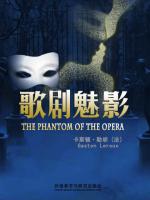
The Phantom of the Opera by Gaston Leroux Gaston Leroux’s The Phantom
of the Opera, first published in 1910, is far more than a simple horror
novel or a romantic melodrama. It is a haunting exploration of love,
obsession, deformity, and the power of art — themes that continue to
resonate with readers over a century later. While most people today know
the story through Andrew Lloyd Webber’s iconic musical, the original
novel offers a darker, more complex narrative that deserves careful
attention. The plot revolves around the mysterious “Opera Ghost” who
terrorizes the Palais Garnier in Paris. This phantom is actually Erik, a
brilliant but disfigured genius who lives in the catacombs beneath the
opera house. He falls obsessively in love with Christine Daaé, a young
soprano, and uses his influence to make her a star while demanding her
exclusive devotion. The tension escalates as Christine rekindles her
childhood friendship with Raoul, Vicomte de Chagny, leading to a tragic
love triangle that culminates in a dramatic confrontation deep
underground. One of the novel’s greatest strengths is its atmospheric
setting. Leroux masterfully describes the labyrinthine passages, hidden
trapdoors, and dark cellars of the opera house, creating a world that
feels both real and fantastical. The building itself becomes a character
— mysterious, oppressive, and full of secrets. The author’s journalistic
background adds credibility; he presents the story as a “true account”
based on interviews and documents, blurring the line between fact and
fiction. At its core, The Phantom of the Opera is a meditation on
loneliness and the human need for connection. Erik is not merely a
villain; he is a tragic figure whose physical ugliness has condemned him
to a life of isolation. His monstrous behavior stems from rejection and
despair. When he cries, “I am so ugly that no one loves me,” it is
impossible not to feel sympathy. Christine, caught between fear and
pity, represents the conflict between compassion and self-preservation.
Raoul, though noble, sometimes appears shallow compared to the depth of
Erik’s passion. However, the novel does have flaws. The pacing can be
uneven, with long expository sections that slow the action. Some
characters, like the Persian, feel underdeveloped despite their
importance to the plot. Additionally, Leroux’s prose occasionally leans
toward melodrama, which may feel dated to modern readers. Despite these
shortcomings, The Phantom of the Opera remains a powerful work. It
challenges us to consider what lies beneath the surface — both in the
opera house and in the human heart. The story’s enduring popularity
proves that we are drawn to tales of beauty and monstrosity intertwined.
Whether you come for the mystery, the romance, or the tragedy, this
novel will leave you thinking about the price of love and the masks we
all wear. In conclusion, I highly recommend this classic to anyone
interested in Gothic literature, psychological thrillers, or timeless
love stories. It is a book that rewards rereading, revealing new layers
with each encounter. Just be prepared to look twice at every shadow in
your own theater.

 京公网安备 11010802032529号