


Book Review
薏米yi.
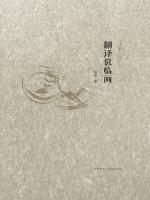
Translation as Painting from Life (《翻译似临画》) by Fu Lei First coined by
the great Chinese translator Fu Lei (1908–1966) in 1951, the phrase
"translation should be like painting from life — seeking not formal
likeness but spiritual resemblance" (翻译当如临画,所求不在形似而在神似) has become
one of the most quoted maxims in Chinese translation theory. The volume
Translation as Painting from Life (《翻译似临画》), edited by Fu Min (Fu Lei's
son) and published by Foreign Language Teaching and Research Press in
2014 as part of the "Words of Translators" series, brings
together Fu Lei's essays and letters on translation in a bilingual
Chinese-English edition — a compact yet richly layered collection for
anyone serious about literary translation. The book is divided into two
main parts: "Notes on Translation" (译话点滴), which gathers Fu
Lei's prefaces and theoretical pieces (including the forewords to his
retranslations of Le Père Goriot and Cousin Bette, and his famous
"Dribs and Drabs of Translation Experience"), and
"Translation Correspondence" (翻译书札), a treasure trove of
letters to fellow translators such as Song Qi, Luo Xinzhang, and his own
son Fu Cong. A brief appendix compiling the Fu Lei research bibliography
(1970–2013) rounds out the volume. What sets this revised edition apart
is the inclusion of original book covers, facsimiles of Fu Lei's
manuscripts, and archival material — giving the reader a tangible sense
of the man behind the translations. Fu Lei's translation philosophy is
built on the word 神似 (shen-si, "spiritual resemblance"). For
him, translation is not a mechanical transfer of meaning but an act of
artistic re-creation, akin to a painter copying a masterpiece — you must
capture the soul, not merely the contour. He famously argued that a
translator must "understand, experience, and feel the original
deeply; otherwise the reader can never understand, experience, and feel
it." This demand extends beyond language: Fu Lei insists that a
literary translator's foundation is artistic cultivation (艺术修养). In his
letters to Luo Xinzhang, he writes that translation is no less demanding
than a musician's performance — the translator must "live with the
characters day and night," as he did when rendering Balzac's
Splendeurs et Misères des Courtisanes. Reading these pieces is
humbling. Fu Lei's self-criticism is unsparing: he confesses to
hesitating for years before tackling Candide, and to finding his own
early drafts "stiff in wording." His letters reveal a man who
revised obsessively, fought for terminological consistency, and bristled
when editors tampered with his choices. The famous line about
translators "dancing in shackles" — often attributed loosely
in Chinese discourse — finds its true temper here: Fu Lei accepts the
shackles but refuses to let them numb the rhythm. That said, the book
is not without limitations for the general reader. Fu Lei's concerns are
overwhelmingly those of literary translation, specifically
French-Chinese renditions of Balzac, Voltaire, and Romain Rolland.
Readers looking for guidance on non-literary, technical, or
bidirectional English-Chinese translation may find the scope narrow.
Moreover, the essays and letters were written across decades in a
refined, slightly classical Chinese idiom; even in the bilingual
edition, some nuance inevitably sits on the Chinese side. But for its
intended audience — translation scholars, aspiring literary translators,
and students of comparative literature — this is a minor quibble.
Translation as Painting from Life is less a "how-to" manual
than a portrait of a translator's mind. It reminds us that behind every
polished sentence in Fu Lei's Balzac lies a man who treated words as
seriously as a painter treats pigment. In an age of machine translation
and speed, Fu Lei's patient, almost devotional craft feels almost
radical. I'd recommend it not just to translators, but to anyone who
cares why some translated books read like originals while others don't.
Pick it up, and you'll close it thinking differently about what it means
to carry a voice across languages.

 京公网安备 11010802032529号