

Woolf: A Manifesto f
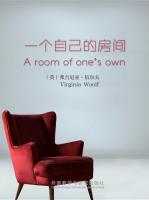
Virginia Woolf’s A Room of One’s Own is a seminal work in feminist literature, blending essayistic rigor with lyrical prose to interrogate the systemic barriers women face in literary and intellectual life. First published in 1929, this extended essay—rooted in lectures delivered at Cambridge University—remains as urgent today as it was nearly a century ago, offering both a historical critique of patriarchal oppression and a visionary call for gender equity in creative expression.
Woolf’s central argument—that “a woman must have money and a room of her own if she is to write fiction”—is deceptively simple yet profoundly radical. She posits that creativity cannot flourish in conditions of economic dependency or social marginalization. By contrasting the hypothetical “Shakespeare’s sister” (a talented woman denied education and opportunity) with the historical reality of male literary dominance, Woolf exposes how systemic sexism stifles female genius. The “room” symbolizes not just physical space but autonomy: financial independence, privacy, and the freedom to think without societal judgment.
Woolf’s narrative approach is innovative: she employs a fictional narrator (“Mary Beton, Mary Seton, Mary Carmichael, or any other name you please”) to blend personal reflection, historical analysis, and imaginative storytelling. This technique allows her to humanize abstract ideas—for instance, imagining the life of a gifted Elizabethan woman forced into domesticity makes the cost of patriarchy visceral. The essay’s fluid structure mirrors Woolf’s stream-of-consciousness style, inviting readers to engage with complex arguments through empathy rather than didacticism.
While rooted in early 20th-century Britain, A Room of One’s Own transcends its era. Woolf’s critique of “patriarchal literary traditions” resonates in contemporary debates about gender representation in media, workplace inequality, and the ongoing struggle for women’s voices to be heard. Her advocacy for “dual-sexed” thinking—the idea that great art transcends rigid gender binaries—also anticipates modern discussions of intersectionality and fluid identity. Moreover, her emphasis on economic justice as a prerequisite for creativity remains a rallying cry for marginalized artists worldwide.
Woolf’s prose is both incisive and poetic, balancing scholarly analysis with emotional depth. She avoids dogma, instead using wit and irony to dismantle sexist assumptions (e.g., mocking the notion that women are “naturally” suited to domesticity). The essay’s enduring power lies in its universality: while focused on women writers, its message applies to all who seek to create in the face of oppression. As a foundational text of feminist theory, it has inspired generations of scholars, activists, and artists to challenge inequity and reimagine possibilities.
A Room of One’s Own is more than a historical artifact; it is a living manifesto. Woolf’s vision of a world where “the mind is free to create” regardless of gender continues to challenge us to confront systemic barriers and cultivate spaces—literal and metaphorical—where all voices can thrive. For readers seeking to understand the roots of feminist thought or to find inspiration in the fight for equality, this essay is essential reading. Its brilliance lies not only in its arguments but in its unwavering belief in the transformative power of art and autonomy.
In short, Woolf’s masterpiece is a testament to the enduring struggle for gender equity—and a reminder that the quest for “a room of one’s own” is far from over.

 京公网安备 11010802032529号