

Room & Mind
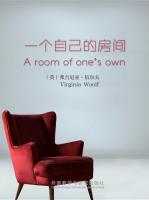
Virginia Woolf’s A Room of One’s Own is not merely a feminist manifesto; it is a profound meditation on the relationship between material circumstances and intellectual freedom. First delivered as lectures at Cambridge in 1928, this extended essay remains startlingly relevant nearly a century later, challenging readers to confront the systemic barriers that have historically silenced women’s voices in literature and beyond. At its core, Woolf’s argument is deceptively simple: for a woman to write fiction, she must have money and a room of her own. Yet beneath this seemingly pragmatic assertion lies a radical critique of patriarchy, class, and the very nature of creativity itself.
Woolf begins by dismantling the myth of innate genius, demonstrating how talent is inextricably bound to opportunity. She invites us to imagine Judith Shakespeare, William’s equally gifted sister, whose life would have been crushed under the weight of societal expectations—denied education, confined to domestic duties, and ultimately destroyed by a world that refused to recognize her brilliance. This fictional tragedy is not an anomaly but a historical norm. For centuries, women’s potential was systematically suppressed, their stories erased, their voices dismissed as hysterical or irrelevant. Woolf does not merely lament this loss; she exposes the machinery of oppression that made it possible. The “room” she demands is not just physical space—it is psychological autonomy, financial independence, and the right to exist without apology.
The essay’s brilliance lies in its blend of razor-sharp logic and lyrical prose. Woolf navigates complex ideas with the grace of a poet and the precision of a philosopher. She critiques the male-dominated literary canon not with anger, but with wry irony and devastating clarity. When she describes the “Angel in the House”—the idealized Victorian woman who sacrifices herself for others—she doesn’t just condemn her; she mourns the creative energy wasted in service to an impossible standard. To write freely, Woolf insists, a woman must kill this angel within herself. This act of self-liberation is both personal and political, requiring courage, solitude, and above all, economic security.
What makes A Room of One’s Own timeless is its refusal to reduce feminism to a single issue. Woolf acknowledges intersectionality long before the term existed, recognizing that class, education, and social status shape women’s experiences differently. She celebrates the working-class woman who writes in stolen moments, while also critiquing the privileged woman who mistakes leisure for liberation. Her vision is inclusive yet uncompromising: true equality requires structural change, not just individual perseverance. The “five hundred pounds a year” she references is not a luxury—it is the foundation upon which intellectual freedom is built. Without it, even the most talented mind is forced to beg, borrow, or steal time and space to create.
Woolf’s call for a “room of one’s own” extends far beyond writing. It is a demand for dignity, agency, and the right to define oneself outside of patriarchal definitions. In today’s world, where women still face wage gaps, reproductive restrictions, and cultural erasure, her words resonate with urgent power. The “room” may now be digital, communal, or shared—but the need for autonomy remains unchanged. Woolf reminds us that creativity cannot flourish in confinement, whether literal or metaphorical. True art emerges from freedom, and freedom requires resources, respect, and recognition.
Ultimately, A Room of One’s Own is more than a book—it is a blueprint for resistance. Woolf does not offer easy answers or sentimental hope; she offers truth. She challenges us to build worlds where every voice can be heard, where every mind can roam unimpeded, and where no talent is lost to silence. Her legacy is not just in the pages she wrote, but in the spaces she opened—for writers, thinkers, dreamers, and rebels who refuse to be contained. As we navigate our own complexities of identity and expression, Woolf’s voice echoes: claim your room, guard your peace, and let your mind shine without fear. The world needs your story—not despite your circumstances, but because of them.


 京公网安备 11010802032529号