


Book Review
用户823521
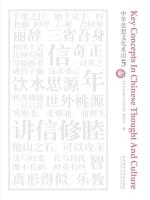
The fifth volume of this distinguished series maintains its rigorous
standard while expanding into increasingly nuanced territories of
Chinese intellectual heritage. This installment features terms such as
"Tianxia" (All-under-Heaven), "Junzi" (Exemplary
Person), and "Wuxing" (Five Phases), demonstrating the
editors' sophisticated curatorial vision in selecting concepts that
operate at the intersection of philosophy, political theory, and
cosmology. What distinguishes this volume is its heightened attention to
conceptual networks. Individual entries now more explicitly map
interconnections between terms, revealing how Chinese thought functions
as an integrated ecosystem rather than isolated propositions. The entry
on "Tianxia," for instance, deftly traces its evolution from
Zhou-dynasty political theology to contemporary discourse on global
governance, illuminating both historical specificity and surprising
modern resonance. The translation quality merits particular praise.
Rendering culturally saturated concepts into English without epistemic
violence demands exceptional skill; the editorial team navigates this
challenge through judicious hybrid strategies—combining transliteration,
explanatory paraphrase, and contextual annotation. The result achieves
uncommon clarity without sacrificing conceptual depth. For scholars of
comparative philosophy, this volume offers indispensable groundwork. For
general readers, it provides structured pathways into one of humanity's
most enduring intellectual traditions. As China's global role evolves,
such precise terminological mapping becomes not merely academic exercise
but urgent cultural infrastructure. This series continues to fulfill
that mandate with distinction.

 京公网安备 11010802032529号