

读中国文化有感
Issac
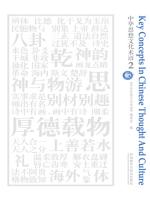
Reflection on Reading English Versions of Chinese Culture While reading
English introductory materials about traditional Chinese culture, I have
gained a brand-new and unique perspective to understand my own nation’s
history, values, and spiritual heritage. Normally, we learn Chinese
culture through Chinese textbooks, which feel familiar and natural.
However, reading it in English offers a different experience. It allows
me to view our culture from an international angle, helping me realize
how profound, inclusive, and extraordinary Chinese civilization truly
is. First of all, reading Chinese culture in English helps me break
cultural blind spots. Many traditional concepts that we take for granted
are actually precious cultural treasures unknown to the outside world.
For example, the ideas of harmony between humanity and nature,
benevolence, courtesy, and perseverance are simple words in Chinese, but
when interpreted in English, they become systematic and universal values
that can be understood by global readers. Through English descriptions,
I found that Chinese culture is not merely a set of ancient stories or
old traditions, but a complete philosophy guiding people’s attitudes
toward life, society, and nature. Moreover, these English versions make
me realize the importance of cultural confidence. In Western documents,
Chinese culture is often praised for its long history, continuous
inheritance, and gentle wisdom. Western cultures tend to advocate
competition and individualism, while traditional Chinese culture
emphasizes modesty, harmony, and collective responsibility. By
comparison, I deeply understand the uniqueness of our cultural roots.
For thousands of years, Chinese people have maintained peaceful
mindsets, respected nature, valued family, and pursued virtue. These
qualities have supported the continuous development of our nation and
formed the stable spirit of Chinese civilization. In addition, reading
English introductions to Chinese culture greatly improves my ability to
spread traditional culture. Many young people can speak fluent English
but cannot accurately introduce Chinese festivals, calligraphy, tea
culture, traditional festivals, or ancient philosophy to foreigners.
Some traditional cultural concepts cannot be directly translated word
for word. Only by learning standardized English expressions can we truly
let foreign audiences understand the essence of Chinese culture. For
instance, terms like the Doctrine of the Mean, filial piety, and unity
of heaven and humanity carry deep cultural meanings. Learning their
accurate English interpretation helps me express traditional culture
more professionally and appropriately. Furthermore, this reading
experience teaches me that cultural communication is mutual. In the
past, I often learned Western culture through English books. Now,
through reading English versions of Chinese culture, I realize that our
own culture is equally wonderful and worthy of being shared with the
world. Global cultural exchange is not a one-way input but a two-way
integration. As young learners, we should not only absorb excellent
foreign culture but also take the responsibility of promoting our own
traditional culture. Finally, this reading journey has broadened my
international vision and strengthened my sense of cultural identity. I
understand that true cultural confidence does not come from blind pride,
but from systematic understanding, rational recognition, and active
inheritance. Traditional Chinese culture is not outdated; it contains
timeless wisdom that still guides modern life, social development, and
personal growth. In conclusion, reading English versions of Chinese
culture is a valuable learning experience. It enables me to understand
my own culture more objectively, master international cultural
expression methods, and build stronger cultural confidence. In the
future, I will continue to learn traditional Chinese culture, improve my
English skills, and strive to become a qualified cultural communicator,
letting more people around the world know the beauty, depth, and warmth
of Chinese civilization.

 京公网安备 11010802032529号