


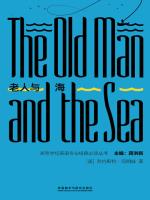
《老人与海》
i稚奈i
The Old Man and the Sea, written by Ernest Hemingway in 1951 and
published in 1952, is a timeless masterpiece that transcends its simple
premise to deliver profound philosophical and emotional depth. Set in
the coastal waters off Cuba, the novella tells the story of Santiago, an
aging, experienced fisherman who has gone 84 days without catching a
fish — a streak that has left him mocked by his peers and doubted even
by his young apprentice, Manolin. Undeterred, Santiago ventures far out
to sea alone, where he hooks a giant marlin — a battle that becomes not
just a test of strength, but a meditation on endurance, dignity, and the
human spirit. Hemingway’s signature minimalist style — spare sentences,
understated dialogue, and rhythmic repetition — perfectly mirrors the
rhythm of the sea and the quiet resilience of its protagonist. There are
no grand speeches or dramatic monologues; instead, Santiago’s inner
strength is revealed through action: rowing tirelessly for days,
enduring physical pain, and speaking gently to the fish as if it were a
worthy opponent. This “iceberg theory” of writing — where meaning lies
beneath the surface — invites readers to reflect deeply on themes of
solitude, perseverance, and the illusion of defeat. The novel’s climax
— the arrival of sharks that devour the marlin’s flesh, leaving only its
skeleton — is often misinterpreted as tragic. But Hemingway reframes
loss as victory: Santiago returns empty-handed, yet spiritually whole.
He has proven his skill, his courage, and his respect for nature. As he
says, “A man can be destroyed but not defeated.” This line encapsulates
the essence of Hemingway’s “code hero” — someone who faces adversity
with grace, dignity, and unwavering will. Beyond its literary merit,
The Old Man and the Sea is also a cultural touchstone. It won the
Pulitzer Prize in 1953 and contributed directly to Hemingway receiving
the Nobel Prize in Literature the following year. Its influence extends
beyond literature into film, education, and even sports — where
“Santiago’s spirit” is invoked as a symbol of grit and determination.
Though labeled here as “American小学” (elementary school level) in
difficulty, the novella’s layered symbolism and existential themes make
it suitable for readers of all ages — from young students learning about
perseverance, to adults grappling with life’s inevitable losses. It’s a
book that rewards rereading: each time, you discover new layers of
meaning in its quiet prose. In conclusion, The Old Man and the Sea is
more than a fishing story — it’s a universal allegory of the human
condition. Hemingway reminds us that true triumph lies not in material
gain, but in the courage to face the unknown, to endure suffering, and
to walk home with head held high — even if you return with nothing but
bones.

 京公网安备 11010802032529号