


Chinese Culture
清盏里的猫
Chinese civilization stretches back more than five thousand years,
evolving continuously and forming a unique spiritual foundation that
shapes the character of the Chinese nation. Countless books attempt to
interpret traditional Chinese culture, yet many are either too academic
and obscure or too simplistic to convey deep meaning. Readings in
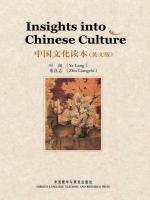
Chinese Culture successfully strikes a perfect balance between
accessibility and depth. Written in clear and refined language, the book
systematically displays the richness and diversity of Chinese culture,
allowing ordinary readers to understand traditional civilization in a
comprehensive and vivid way. After reading this book, I have gained a
clearer insight into the essence of Chinese culture and the spiritual
genes embedded in Chinese people’s lives. One of the greatest
strengths of this book is its complete and systematic framework. Instead
of presenting fragmented cultural knowledge or mechanically listing
historical facts, the book organizes Chinese civilization into a
coherent system. It covers philosophical thoughts, moral values,
classical literature, traditional arts, architecture, folk customs,
traditional craftsmanship, and ancient scientific wisdom. Every chapter
connects past and present, explaining the origin, development, and
influence of cultural traditions. With such well-structured content,
readers can easily grasp how Chinese culture has taken shape, developed,
and sustained its vitality throughout history. The core spiritual part
of the book lies in its interpretation of traditional Chinese
philosophy. It elaborates on Confucianism, Taoism, and Buddhism in
simple but profound terms, revealing how these three schools jointly
constructed the spiritual world of Chinese people. Confucianism
emphasizes benevolence, righteousness, courtesy, wisdom, and faith,
advocating self-cultivation, modesty, and social harmony. It has long
guided Chinese people’s daily behavior, social ethics, and interpersonal
relationships. Taoism advocates harmony with nature, simplicity, and
inner freedom, offering people a peaceful and open-minded attitude
toward life. Meanwhile, Buddhism teaches kindness, tolerance, and
compassion, enriching the nation’s sense of humanity. These three
ideologies have blended and complemented each other throughout history,
forming the gentle, inclusive, and resilient national character that
supports China’s long-standing civilization. Besides philosophical
ideas, the book’s description of traditional art and folk culture makes
ancient traditions warm and approachable. Classical poetry, calligraphy,
painting, opera, and classical gardens all reflect unique Chinese
aesthetics. Unlike Western art, which emphasizes realism and clear
expression, Chinese art pursues artistic conception, subtlety, and blank
space. It values inner emotion and spiritual resonance rather than
superficial decoration. This unique aesthetic reveals the Chinese
people’s pursuit of harmony between humanity and nature. Moreover,
various folk traditions and rituals shown in the book embody the
cultural emotions of ordinary people. Traditional festivals, family
ethics, etiquette norms, and daily customs are not merely old-fashioned
rules, but living cultural heritage passed down from generation to
generation. Festivals represent reunion and gratitude; etiquette
reflects respect and modesty; and traditional lifestyles show the
nation’s persistent pursuit of harmony, kindness, and peace. Through
these detailed descriptions, the book helps readers realize that culture
is never distant or outdated. Instead, it exists in ordinary life,
influencing people’s thoughts, behaviors, and values subtly and
constantly. Reading this book also makes me deeply aware that true
culture requires both inheritance and innovation. Traditional Chinese
culture contains countless valuable spiritual treasures, but it should
not be rigidly preserved without change. In modern society, many
traditional concepts still have powerful practical significance. The
spirit of harmony, honesty, perseverance, and respect for nature can
guide contemporary people to face life and society correctly. At the
same time, traditional culture must keep pace with the times, absorb new
ideas, and combine with modern development to maintain lasting vitality.
In conclusion, Readings in Chinese Culture is a thoughtful and
enlightening work. It systematically presents the charm of Chinese
civilization, helps readers understand the spiritual root of the Chinese
nation, and stimulates cultural confidence and a sense of responsibility
for cultural inheritance. For modern readers, especially young people,
this book is an excellent guide to recognizing traditional culture,
reflecting on history, and facing the future. It reminds us that
profound cultural heritage is the most precious wealth of a nation, and
only by truly understanding, inheriting, and innovating traditional
culture can we make ancient civilization shine brightly in the modern
world.

 京公网安备 11010802032529号