

book review
雷艺殊
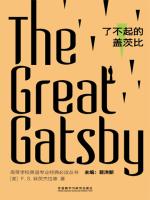
F. Scott Fitzgerald’s The Great Gatsby is not merely a story of love and
obsession, but a poignant elegy for the disillusionment of the American
Dream in the roaring 1920s. Through the lens of Nick Carraway, the
narrator, we are drawn into the glittering yet hollow world of Jay
Gatsby, a man who builds an empire of wealth and indulgence to win back
his lost love, Daisy Buchanan. Gatsby’s charm lies in his unyielding
idealism. He reinvents himself from a poor farm boy to a millionaire,
throwing lavish parties every weekend in the hope that Daisy will
stumble into his mansion. His love for Daisy is not just romantic
longing, but a fixation on the past—a past he idealizes as perfect and
attainable. Yet this idealism is precisely his tragedy. Daisy, with her
voice “full of money,” represents the shallowness and moral emptiness of
the upper class; she is a symbol of the dream Gatsby chases, but one
that is ultimately hollow and unattainable. Fitzgerald masterfully
uses imagery to weave the theme of illusion and reality. The green light
at the end of Daisy’s dock, a recurring motif, symbolizes Gatsby’s hopes
and dreams—visible yet always out of reach. The Valley of Ashes, a
desolate wasteland between West Egg and New York, stands as a stark
contrast to the opulence of Gatsby’s parties, reflecting the moral decay
and spiritual emptiness beneath the glitter of the Jazz Age. Every
champagne toast, every silk dress, and every jazz note in Gatsby’s
mansion masks the loneliness and despair that lurk beneath the surface.
What makes The Great Gatsby a timeless classic is its profound critique
of the American Dream. Gatsby’s relentless pursuit of wealth and love is
a mirror to the era’s obsession with material success, where happiness
is measured by money and social status. Yet when Gatsby dies, abandoned
by the people he entertained and loved, Fitzgerald reveals the残酷 truth:
the American Dream, for all its allure, is often a fragile illusion,
built on greed, vanity, and the impossible desire to recapture the past.
Nick’s final reflection—“So we beat on, boats against the current, borne
back ceaselessly into the past”—captures the essence of the human
condition. We all chase our own “green lights,” clinging to ideals that
may never come true, yet we keep moving forward, driven by hope. The
Great Gatsby is not just a novel about the 1920s; it is a universal
story about love, loss, and the eternal gap between our dreams and
reality. Even a century after its publication, it remains a powerful
reminder of the dangers of idealizing the past and the emptiness of
chasing a dream that is built on sand.

 京公网安备 11010802032529号