

Bridging Languages
侯丽嘉
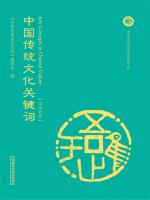
I just finished reading "Key Concepts in Traditional Chinese
Culture," and I really enjoyed it. It’s not like a regular textbook
— it feels more like a friendly guide that helps you understand Chinese
culture while learning English. The book’s strength lies in its careful
selection of "keywords" such as Ren (Benevolence), Li
(Ritual/Propriety), Dao (The Way), and He (Harmony). Each entry is
clearly structured: a concise Chinese explanation explores the term’s
historical and cultural roots, while the English side provides not just
a translation, but a practical interpretation and example sentences. For
instance, seeing the famous line "Dao ke dao, fei chang dao"
rendered as "The Dao that can be spoken of is not the eternal
Dao" helped me grasp both the challenge of translation and the
profound meaning behind the words. As an English language resource, the
book is highly effective. It moves beyond basic vocabulary memorization.
Learning the word "harmony," for example, becomes a lesson in
family ethics, the relationship between humans and nature, and even the
ancient ideal of peaceful coexistence among states. This approach makes
language learning meaningful and connects it directly to cultural
understanding. Sometimes it’s hard to translate Chinese ideas perfectly
into English, but this book does a good job of keeping things simple and
clear. It made me realize that language learning is not just about
translation — it’s about understanding different ways of thinking. As a
college student, I think this book is very helpful. It doesn't use
difficult language, and the topics are interesting. It’s like a small
bridge between two cultures, and it made me feel more confident talking
about Chinese traditions in English. I would recommend it to any student
who wants to learn English in a meaningful and cultural way.

 京公网安备 11010802032529号