


书评
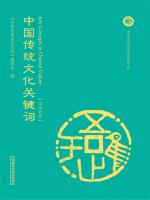
A Review of “ Keywords of Chinese Traditional Culture”
In an era where cultural globalization and localization engage in constant dialogue, *Keywords of Chinese Traditional Culture* emerges as a lucid and profound compass, guiding readers through the intricate labyrinth of China’s millennia-old cultural heritage. Far from a mere glossary of terms, this book decodes the essence of Chinese civilization by dissecting core concepts, offering both academic rigor and accessible insights that cater to scholars, students, and curious readers alike.
What sets this book apart is its unique approach to organizing content around **keywords**—the cultural DNA strands that have shaped Chinese thought and society. Instead of adopting a rigid chronological or thematic framework, it selects over 50 pivotal terms, ranging from *“Dao (the Way)”* and *“Qi (vital energy)”* in philosophy to *“Filial Piety”* and *“Harmony with Nature”* in ethics and aesthetics. Each entry is treated as a standalone yet interconnected exploration: the chapter on *“Loyalty and Righteousness”* not only traces its roots in Confucian classics but also analyzes its evolution through dynastic history, its influence on traditional art such as Peking Opera, and even its modern resonance in social values. This layered analysis avoids the pitfall of oversimplification, which often plagues introductions to foreign cultures.
The book’s strength lies in its balance between **scholarship and readability**. Written by a team of seasoned sinologists and cultural researchers, it draws on a wealth of historical texts, archaeological findings, and cross-cultural comparisons. For instance, when explaining *“Feng Shui”*, the authors do not dismiss it as a superstitious practice but contextualize it as an ancient Chinese system of ecological wisdom that integrates geography, astronomy, and human settlement. They also contrast it with Western environmental design theories, highlighting both similarities and differences, thus enabling readers to grasp its cultural specificity without resorting to stereotypes. At the same time, the prose is free of jargon; complex ideas are illustrated with vivid anecdotes—such as how the concept of *“Mean (Zhong Yong)”* guided ancient scholars in their pursuit of moral perfection, or how *“Tea Culture”* embodies the Chinese philosophy of quietude and mindfulness.
Another notable merit is its **forward-looking perspective**. The book does not confine Chinese traditional culture to a museum piece frozen in time. Instead, it explores how these keywords have been reinterpreted and revitalized in contemporary China. For example, the discussion of *“Harmony (He)”* links the ancient ideal of *“Great Harmony (Datong)”* to modern initiatives in ecological protection and international cooperation, demonstrating that traditional culture is not a relic but a dynamic resource for addressing global challenges. This perspective is particularly valuable for readers seeking to understand the cultural underpinnings of modern China beyond headlines and stereotypes.
Admittedly, the book has minor limitations. Given the vastness of Chinese traditional culture, some significant keywords—such as *“Kung Fu”* or *“Calligraphy Aesthetics”*—are omitted, which may leave some readers wanting more. Additionally, while the cross-cultural comparisons are insightful, they could be more extensive, especially in engaging with non-Western cultural perspectives to foster a more inclusive dialogue.
Nonetheless, these flaws do not overshadow the book’s overall excellence. *Keywords of Chinese Traditional Culture* is more than a reference book; it is a bridge that connects the past and present, the East and West. It invites readers to move beyond superficial impressions and delve into the spiritual core of a civilization that has endured for thousands of years. For anyone eager to gain a deep, nuanced understanding of Chinese traditional culture, this book is an indispensable companion—one that inspires reflection, sparks curiosity, and fosters a greater appreciation for the richness of human cultural diversity.
In a world that often emphasizes divisions, *Keywords of Chinese Traditional Culture* reminds us that cultural exchange begins with understanding the keywords that define a people’s identity. It is a timely, illuminating work that deserves a place on the bookshelf of every cultural enthusiast and global citizen.
**Word count**: Approximately 1000

 京公网安备 11010802032529号