


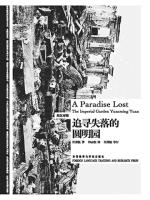
追寻失落的圆明园
Book Review: A Paradise Lost: The Imperial Garden Yuanming Yuan
A Paradise Lost: The Imperial Garden Yuanming Yuan, written by historian Wang Rongzu, is far more than a historical record of a famous royal garden. It is a profound, tender, and thought-provoking work that traces the rise, glory, destruction, and eternal memory of Yuanming Yuan—the legendary “Garden of Gardens”—one of China’s most cherished cultural treasures. Unlike many popular accounts that only focus on its tragic ruin, this book reconstructs the full life of Yuanming Yuan with rigorous scholarship, delicate narration, and deep historical empathy, making it a classic work for understanding Chinese imperial culture, architectural art, and modern national trauma.
The book is structurally divided into three core parts: the construction and expansion of Yuanming Yuan, the imperial life and political functions within the garden, and its catastrophic destruction and subsequent decline. This clear and logical framework allows readers to follow the complete journey of Yuanming Yuan, from a peaceful royal retreat to a symbol of national sorrow. Wang does not treat Yuanming Yuan as a silent architectural relic; instead, he restores it as a living, breathing space that carried the aesthetics, politics, daily life, and spiritual sustenance of the Qing Dynasty.
In the first part, the author vividly depicts the birth and growth of Yuanming Yuan. Starting from the Kangxi Emperor’s initial construction, the garden was continuously expanded and perfected under the reigns of Yongzheng, Qianlong, and subsequent emperors, gradually evolving into a vast complex that integrated traditional Chinese landscape gardening, palace architecture, and even Western-style pavilions. Wang spares no effort in restoring its layout, scenic spots, architectural design, and aesthetic philosophy. He points out that Yuanming Yuan was not only a leisure resort for the imperial family but also a masterpiece of Chinese garden art, perfectly embodying the traditional Chinese ideal of “harmony between man and nature.” Its delicate rockeries, limpid lakes, elegant halls, and winding corridors created a poetic, idyllic world that blended natural beauty with human craftsmanship. What makes the book outstanding is that it avoids empty praise of grandeur; instead, it combines historical documents and spatial research to present a tangible, vivid image of the garden, letting readers “see” the lost glory beyond cold historical terms.
The second part digs deeper into the daily operation and political significance of Yuanming Yuan, which is the most distinctive highlight of the book. Wang breaks the stereotype that Yuanming Yuan was merely a pleasure palace. He reveals that for more than a century, it was not only the imperial family’s permanent residence but also an important political center alongside the Forbidden City. Five Qing emperors handled state affairs, received envoys, held ceremonies, and lived their daily lives here. The author restores the trivial but real details of imperial life: court meetings, seasonal rituals, study, recreation, and the daily management of the huge garden. These descriptions humanize the distant imperial history and show that Yuanming Yuan was the heart of Qing imperial power and daily life. It carried the order, dignity, and worldly joys of the empire, making the book warm and credible rather than rigidly academic.
The most heartbreaking and powerful chapter is the narration of Yuanming Yuan’s destruction. In 1860, during the Second Opium War, Anglo-French allied forces invaded Beijing, looted and burned Yuanming Yuan, turning this unparalleled garden into ruins. Wang does not describe the disaster with excessive sensationalism; instead, he presents the facts calmly and objectively, recording the looting of countless cultural relics, the burning of magnificent buildings, and the gradual decay of the ruins in the following years. This restrained writing is more powerful than emotional accusations. It makes readers clearly realize that the destruction of Yuanming Yuan was not only a loss of architecture and treasures but a severe wound to Chinese civilization and national dignity. The author does not stop at recording grief; he leads readers to reflect: the fall of Yuanming Yuan mirrored the decline of the Qing Dynasty, exposing the crisis of a closed empire facing modern Western shocks. It is a symbol of both cultural splendor and historical humiliation.
What elevates this book to a profound historical work is its final reflection on memory and inheritance. Yuanming Yuan has long been reduced to broken walls, but it has never faded from Chinese collective memory. It represents lost beauty, injured pride, and a nation’s reflection on history. Wang Rongzu’s “pursuit” of Yuanming Yuan is not only a restoration of physical history but also a dialogue with past glory and pain. He reminds readers that remembering Yuanming Yuan is not to dwell on hatred, but to cherish civilization, face history squarely, and understand that cultural prosperity is closely bound to national destiny.
In conclusion, A Paradise Lost: The Imperial Garden Yuanming Yuan is an excellent historical work that balances academic rigor and literary warmth. It allows readers to witness the former prosperity of the “Garden of Gardens,” understand its profound cultural and political meaning, and deeply feel the heavy trauma behind its ruins. For readers who want to know Yuanming Yuan, Qing Dynasty history, or Chinese cultural spirit, this book is irreplaceable. The lost Yuanming Yuan can never be fully restored, but through this book, we retrieve its memory, perceive its weight, and remember that civilization’s glory deserves eternal protection, and historical trauma deserves lifelong reflection.

 京公网安备 11010802032529号