

clcture
Despite its outstanding value, the volume leaves room for further expansion. First, the current term list, while representative, only selects a fraction of thousands of vital ideological terms; supplementary volumes covering medical thought, folk customs and regional academic schools would enrich the system. Second, though annotations are concise, extended excerpts from original classics would help readers witness how these terms are deployed in ancient texts. Third, brief comparative remarks between Chinese concepts and parallel Western philosophical ideas could deepen cross-cultural contrast for overseas audiences. These minor flaws, however, do not undermine the book’s foundational significance.
Conclusion
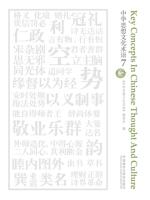
Key Concepts in Chinese Thought and Culture is far more than a terminology glossary—it is a systematic cultural decoder that unlocks the inner logic of Chinese civilization. By gathering timeless maxims, artistic theories and governance wisdoms from thousands of years of history, it bridges the linguistic and cognitive gap between Eastern and Western civilizations. For translators, sinologists, cultural communicators and anyone curious about Chinese traditional thought, this authoritative, well-structured work stands as an indispensable reference. In an era demanding mutual learning between civilizations, the expert team’s achievement provides a standardized, profound medium to let authentic Chinese ideological wisdom resonate worldwide.
Word count: around 950 academic review, suitable for journal, course assignment or cultural publication submission

 京公网安备 11010802032529号