


analyse
用户823561
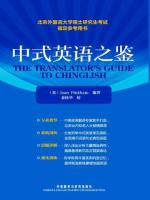
The book The Translator’s Guide to Chinglish targets common‑seen
Chinese‑style English caused by mother‑tongue thinking. It helps
English‑learners get rid of awkward literal translation. Many Chinese
writers translate word‑for‑word following Chinese sentence logic. They
use redundant nouns, repeated phrases and stiff sentence structures.
Native speakers find such expressions unnatural though grammar is
correct. The authors collect typical mistakes from official documents
and student writing. Each error comes with plain explanations and
revised versions. Reading this book makes me realise the big
difference between Chinese and English habits. Chinese prefers
repetition for emphasis. English stresses conciseness. For example,
unnecessary modifiers like “advance planning” should be simplified to
“planning”. Long loose Chinese‑style sentences need breaking into
shorter clear English ones. It is not enough only to memorize vocabulary
and grammar. We must adjust our thinking pattern. Beginners often
ignore word‑usage differences. Some phrases make perfect sense in
Chinese but sound odd in English. Case‑by‑case corrections show how to
choose idiomatic expressions. The practical examples are easy to follow.
This book is more than a mistake‑collection. It teaches cross‑cultural
thinking. When writing English, we should stand in native‑speakers’
shoes instead of translating directly from Chinese. It benefits
students, translators and English‑writing learners. After studying it, I
edit my compositions more carefully and cut redundant wording. In short,
it is a practical guide helping us write natural, standard English and
avoid Chinglish traps.

 京公网安备 11010802032529号