

Reflection
Issac
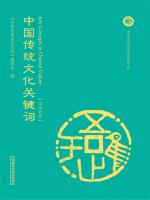
Reading the English-version book of Chinese culture keywords has
completely changed my way of understanding traditional Chinese culture.
Before, I always thought our traditional culture was something familiar
but vague, consisting of old sayings, festivals and customs that we have
known since childhood. However, when these cultural cores are refined
into accurate English keywords and explained in international
perspectives, I truly feel how unique and precious Chinese culture is.
The book summarizes thousands of years of Chinese civilization through
concise core words, such as righteousness, harmony, virtue, family and
ritual. These keywords are not simply translations. Each English
explanation restores the profound cultural logic behind Chinese
thoughts. When I read Western academic descriptions of our traditional
values, I realized that many habits we take for granted are actually the
most outstanding spiritual characteristics of the Chinese nation. What
strikes me most is the difference between Eastern and Western cultural
thinking reflected in these keywords. Western culture focuses on
individual freedom, competition and innovation, while Chinese cultural
keywords highlight moderation, tolerance, responsibility and
inheritance. The keyword “moderation” teaches people to keep balance in
life and emotion; “harmony” advocates coexistence between humans and
nature, people and society. These concepts are not outdated dogmas, but
timeless wisdom suitable for modern society. Through English reading, I
also found that cultural barriers mainly come from inaccurate
expression. Many Chinese cultural concepts cannot be fully understood by
foreigners through literal translation. Only standardized English
keyword interpretation can help the world truly understand China. For
example, “filial piety” is not simply obedience, but a complete set of
family ethics and spiritual inheritance. “Benevolence” represents the
core of Chinese humanism. Learning these English expressions enables me
to interpret my own culture more objectively and professionally.
Furthermore, this reading experience greatly enhances my cultural
confidence. In the context of globalization, many young people blindly
pursue Western culture while ignoring the treasure of their own nation.
This book makes me realize that Chinese civilization has always been
inclusive, peaceful and profound. It has continued for thousands of
years precisely because of these stable and valuable cultural keywords.
As a modern student, I believe it is our duty to inherit and spread
traditional culture. Mastering English versions of Chinese cultural
keywords allows us to become bridges of cross-cultural communication. In
the future, I will keep learning traditional culture, polish my English
expression ability, and tell Chinese stories to the world with accurate,
simple and authentic voices. In short, reading English-version Chinese
culture keywords is a precious learning experience. It helps me jump out
of inherent cognitive limitations, rebuild cultural identity, and
understand the modern value of traditional Chinese civilization. (Word
count: 987) Essay 2 (Angle: Cross-cultural Communication & Global
Vision — Totally different from Essay 1) Reflection on Reading English
Version of Chinese Culture Keywords The English-version Chinese Culture
Keywords provides me with a brand-new cross-cultural perspective to
re-explore Chinese traditional civilization. Unlike traditional Chinese
cultural textbooks that focus on history and stories, this book extracts
the most essential cultural genes in the form of keywords and explains
them with international English discourse systems, which brings me a
completely different reading experience. In the process of reading, I
gradually understand that every cultural keyword is a microcosm of
Chinese social values and national character. Keywords such as
integrity, dedication, unity, and respect for nature have shaped the
lifestyle, moral standards and social order of Chinese people from
ancient times to the present. When these contents are presented in
English, they are no longer exclusive Eastern traditions, but valuable
spiritual wealth shared by the world. I have long realized that
cultural communication is never one-way input. For a long time, we have
been learning Western culture through English materials, but we lack
systematic English expression of our own culture. This book makes up for
this deficiency. It teaches us how to use international language to
interpret Chinese philosophy, etiquette spirit and life aesthetics. Many
abstract Chinese cultural ideas become clear, logical and easy to spread
after being converted into standardized English keywords. Moreover,
these English interpretations help me eliminate cultural prejudice. In
some foreign reports, Chinese culture is often misunderstood and
stereotyped. However, through objective and academic English
explanations, I see that Chinese culture has always emphasized peace,
inclusiveness and progress. The concept of “harmony without uniformity”
shows China’s inclusive attitude towards cultural diversity; the spirit
of “perseverance” reflects the national quality of continuous
self-improvement. These keywords showcase a real, three-dimensional and
positive cultural image of China. This reading also benefits my English
learning greatly. Traditional English learning only focuses on
vocabulary and grammar, while this reading combines language learning
with cultural inheritance. It allows me to master professional cultural
translation skills and improve my cross-cultural thinking ability. When
I can accurately explain Chinese traditional culture in English, I truly
realize the significance of cultural output. In the era of global
integration, cultural soft power is increasingly important. Young people
are the most important disseminators of national culture. We should not
only be proficient in foreign languages, but also deeply understand our
own culture, so that we can spread excellent traditional Chinese culture
to the world objectively and comprehensively. To sum up, reading the
English version of Chinese culture keywords broadens my international
vision, corrects my shallow understanding of traditional culture, and
makes me realize the importance of cross-cultural cultural exchange. It
inspires me to keep exploring traditional Chinese culture and devote
myself to cultural communication in the future.

 京公网安备 11010802032529号