

A Window into Two Ways of Thinking
用户870203
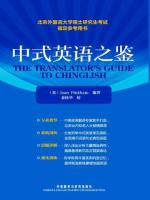
The Translator’s Guide to Chinglish is far more than a grammar handbook
or a collection of translation tricks. At its core, it is an exploration
of how two fundamentally different languages shape two fundamentally
different ways of thinking. Pinkham reveals that Chinese and English
operate on opposite principles. Chinese rhetoric thrives on repetition,
category nouns, and elaborate modifiers to create emphasis and
completeness. English, by contrast, prizes conciseness, logical
precision, and clarity. The result is that Chinese learners who possess
solid vocabulary and grammatical foundations unconsciously transfer
Chinese thought patterns into their English writing. They produce
sentences that are grammatically flawless but stylistically
foreign—verbose, redundant, and mechanically rigid. Pinkham’s genius is
making this invisible problem visible. However, the book’s strict
emphasis on conciseness occasionally overlooks contexts where repetition
or embellishment serves a rhetorical or cultural purpose. Translation is
not just about clarity—it is also about fidelity to tone and intent.
Nevertheless, for anyone seeking to understand why their English sounds
like “translationese” rather than authentic expression, this book offers
an essential education. It forces readers to confront a humbling truth:
writing good English requires not just learning the language, but
unlearning the habits of one’s own.

 京公网安备 11010802032529号