

An Enduring Classic with Contemporary Blind Spots
用户870203
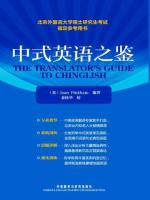
First published in 2000, The Translator’s Guide to Chinglish has earned
its place as a classic in Chinese-English translation. Its central
mission—to purge English of unnecessary words and illogical
structures—remains as relevant today as it was two decades ago. The
book’s systematic breakdown of Chinglish categories, supported by
hundreds of annotated examples, makes it a uniquely practical resource.
Yet the book shows its age in several ways. Many examples are drawn from
political and bureaucratic documents, giving the text a distinctly
official flavor that some readers find off-putting. More significantly,
the rise of AI translation tools has introduced a new dimension to the
Chinglish problem. Machine-generated English often exhibits the very
redundancies and unnatural phrasings that Pinkham diagnoses—suggesting
that the book’s principles are more urgent than ever, even if its
examples feel dated. Pinkham’s underlying philosophy—that good English
is direct, simple, and clear—remains sound. But language is fluid, and
some of her corrections may strike contemporary readers as overly rigid.
The book offers little guidance for creative or literary writing,
focusing instead on normative correction. Despite these shortcomings,
this classic guide rewards careful study. For those willing to look past
its dated examples and prescriptive tone, it offers timeless lessons in
how to make English not just correct, but alive.

 京公网安备 11010802032529号